What Your Child May Be Thinking About Friendship (But Not Saying Out Loud)
One of the hardest parts of parenting is watching your child struggle with friendships.
Maybe they weren't invited to the birthday party. Maybe their best friend suddenly wants to play with someone else. Maybe they come home saying, "Nobody wants to play with me."
As parents, we want to make it better. We want to give advice, solve the problem, or reassure them that everything will be okay.
But before we jump into fixing it, it helps to understand what may be happening beneath the surface.
Because when children experience friendship challenges, they're often telling themselves stories that we never hear.
"Maybe Something Is Wrong With Me"
When adults experience friendship problems, we can usually recognize that not every friendship is meant to last.
Children don't always have that perspective.
Instead of thinking, "Maybe we're growing apart," they often think, "There must be something wrong with me."
This is why friendship struggles can have such a big impact on self-esteem.
What children need most during these moments is not someone to immediately fix the situation. They need someone to remind them that being left out does not change their value.
"Everyone Else Has Friends Except Me"
Children notice everything.
They notice who gets invited to birthday parties. They notice who always seems to have someone to play with. They notice who appears popular.
What they don't see is that many of those children are struggling too.
Friendship challenges are a normal part of childhood. They don't mean your child is doing something wrong, and they certainly don't mean they're unlikable.
"I Need Everyone to Like Me"
Many children believe that if someone doesn't want to be their friend, they have somehow failed.
But one of the most important lessons we can teach our children is this:
Not everyone will like you.
And that's okay.
Just as your child won't connect with every person they meet, not every child they meet will connect with them.
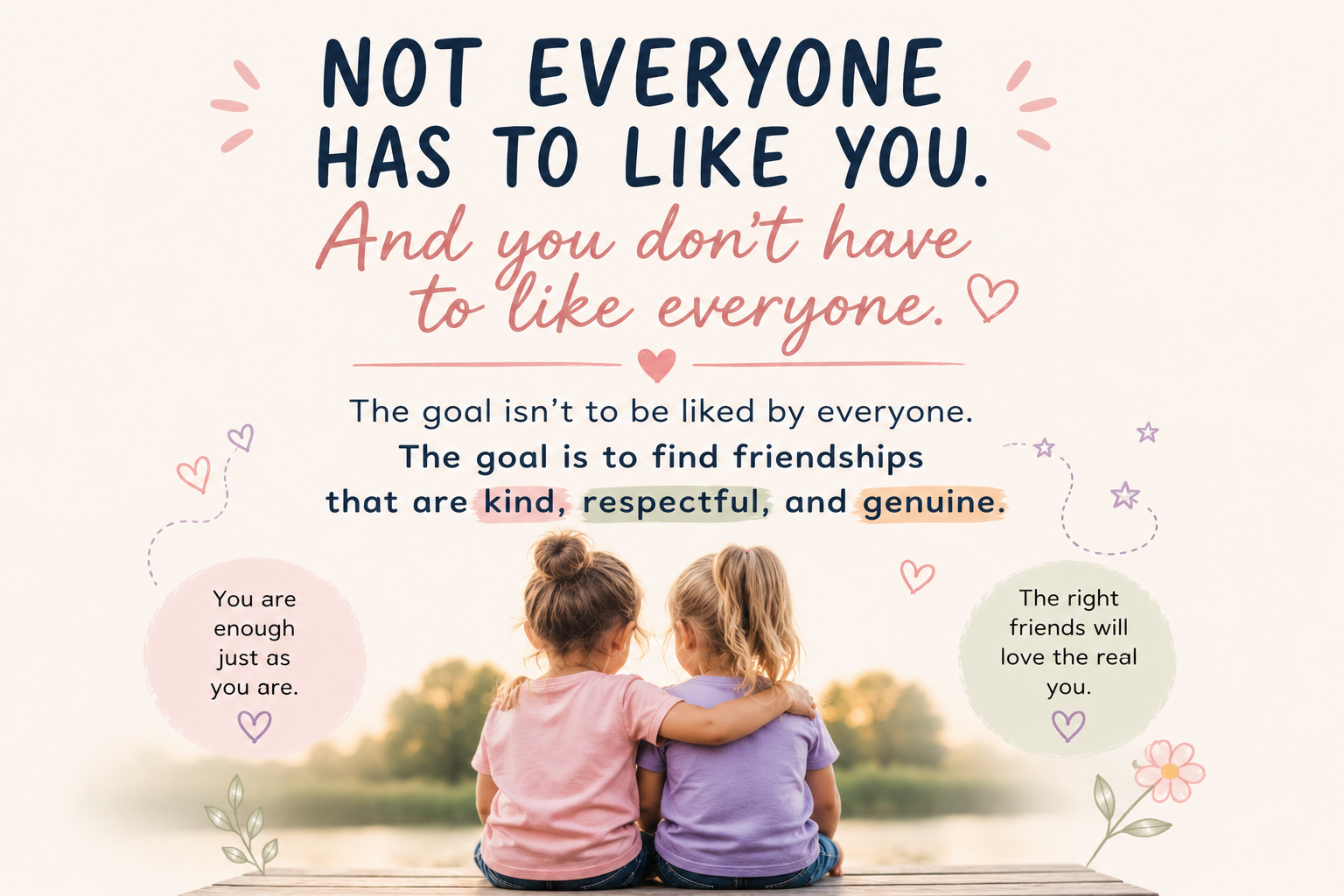
The goal is not to be liked by everyone. The goal is to find friendships that are kind, respectful, and genuine.
"If I Change Who I Am, Maybe They'll Include Me"
Sometimes children begin changing themselves to fit in.
They stop talking about their interests. They hide parts of their personality. They try to become who they think others want them to be.
This can be heartbreaking to watch.
Healthy friendships don't require children to pretend to be someone they're not.
The right friends will appreciate them for who they are.
"Maybe I Should Stay Friends With Them Anyway"
Many children stay in friendships that hurt them because they're afraid of being alone.
They tolerate teasing, exclusion, or unkind behavior because having a difficult friend feels safer than having no friend at all.
This is where boundaries become so important.
Your child deserves friendships where they feel respected, valued, and safe.
Being alone for a season is often healthier than staying in a friendship that repeatedly causes pain.
Books We Love for Teaching Friendship Skills
Sometimes stories help children understand friendship challenges in a way that advice can't.
We've put together a list of our favorite children's books about friendship, kindness, inclusion, and healthy relationships.
👉 Browse Our Favorite Friendship Books Here
What Children Need Most From Us
When our children struggle socially, we often focus on helping them make friends.
But what they really need is something deeper.
They need adults who help them understand:
Their worth is not determined by who includes them.
Friendship struggles happen to everyone.
Not everyone has to like them.
They never need to change who they are to earn connection.
Healthy friendships feel respectful, safe, and reciprocal.
The goal is not to raise a child who is liked by everyone.
The goal is to raise a child who knows their value, knows how to be a good friend, and knows how to choose friends who treat them well.
Because those are the skills that will serve them long after childhood.
I wanted to include some writing so I wrote down our results and then it was her turn :)